Tag: geopolitics

  • THE NEXUS OF CLIMATE AND COMMERCE

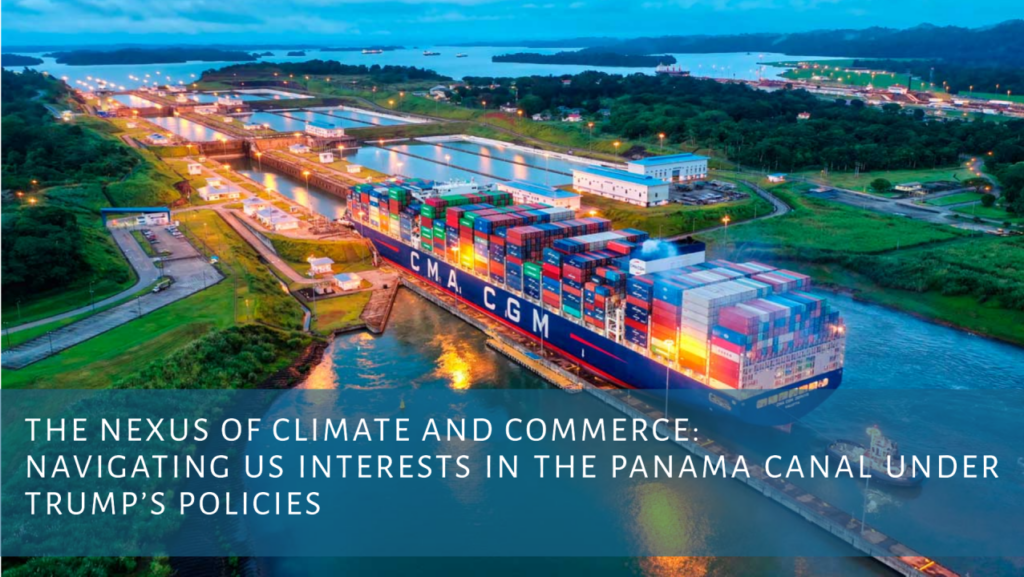
    The choice of Panama for the US Secretary of State, Marco Rubio’s first overseas trip reflects the growing geopolitical and economic stakes linked to the Panama Canal. The canal faces challenges from climate-induced water shortages and China’s growing regional influence. Severe drought, worsened by El Nino, has forced transit restrictions, disrupting supply chains and raising costs. Chinese investments in Panama’s ports fuel US strategic concerns.  President Trump’s withdrawal from the Paris Agreement, the suspension of US foreign aid, and calls to reassert US ownership of the canal, introduce new uncertainties. The Rubio visit signals that the US still recognises the canal’s importance. Although climate-related economic investments are not currently on President Trump’s agenda, they have the potential to help the US maintain influence over its critical trade routes, support Panama’s development without increasing Chinese dependency, and secure its strategic regional interests, all while staying true to “America First” priorities.

    THE STRUGGLING PANAMA CANAL: WATER CRISIS AND GLOBAL TRADE IMPLICATIONS

    The Panama Canal, responsible for about 5% of global trade, currently faces dangerously low water levels due to insufficient rainfall and the influence of El Nino. The canal is dependent on freshwater from Lake Gatun, and the ongoing drought has prompted the Panama Canal Authority (PCA) to impose water-saving measures, including reducing the number of ships passing through each day and restricting cargo weight. These restrictions create significant challenges for US LNG and grain exports as well as other industries dependent on the canal, leading to higher costs, supply chain disruptions and potential impacts on the competitiveness of US exports in global markets

    This situation highlights a critical vulnerability for global trade, especially for the US, which relies on the canal for 40% of its East-West coast of the Americas container traffic. Shipping companies have reported disruptions, with delayed shipments affecting everything from food to textiles. These disruptions further underscore how water scarcity at the Panama Canal could escalate trade costs and cause more severe delays as cargo is rerouted through alternative, longer routes.

    While the US exit from the Paris Agreement will upend international climate goals, the effects of the US exit on the Panama Canal will be more indirect at best.

    A more immediate issue is the suspension of US foreign aid in recent weeks, which has historically supported programs critical for Panama’s environmental management. These funds have been used to maintain the Chagres River Basin, which provides 45% of the water necessary for Panama Canal operations. The potential loss of these funds could directly exacerbate the water shortage and undermine efforts to preserve the water sources vital for both the canal and Panama’s urban water supply. This situation puts pressure on US strategic interests in Panama, particularly in maintaining unimpeded access to the Panama Canal, a crucial conduit for US maritime trade.

    GEOPOLITICAL AND ECONOMIC CONCERNS: CHINA’S ROLE AND US INTERESTS

    Beyond the environmental concerns, the geopolitical consequences of climate change at the Panama Canal should not be ignored. China’s growing economic footprint in Latin America, particularly in Panama, with investments in port operations near the canal, raises alarms in Washington about the long-term implications of China gaining control over vital infrastructure.

    Yet, while China’s economic interests and influence in Panama are expanding, the assumption that China controls the canal itself is an oversimplification. The canal is operated by the Panama Canal Authority (PCA), a government agency, and China’s investments are in port operations not the canal locks or its operations. Furthermore, Panama is a sovereign nation with significant economic and political leverage due to its control over a vital global trade route. This leverage allows Panama to negotiate favourable terms for canal transit fees, attract investment from both the US and China, and maintain its neutrality in the US-China rivalry. However, this leverage is not absolute. Both the US and China hold significant economic and political influence, and Panama must carefully navigate its relationship with both powers to maximise its own interests.

    Rather than focusing exclusively on China’s potential dominance, the US should recognise that Panama’s growing ties with China are part of a broader trend of Latin American countries diversifying their international relationships. The US should also consider its own diplomatic and economic engagement in the region, building alliances that are not solely focused on competition with China but rather on mutual development, including sustainable infrastructure projects to combat the effects of climate change.

    THE PANAMA CANAL AUTHORITY’S (PCA) RESPONSE: SUSTAINABILITY MEASURES AND LONG-TERM PLANNING

    The PCA has been proactive in addressing the current water crisis by implementing various sustainability initiatives. For instance, the Authority has invested in more water-efficient locks and developed methods to reuse water in the canal’s lock chambers, saving millions of gallons daily. Additionally, the Authority is considering a major project to build reservoirs by damming the nearby Indio River to supplement the canal’s water supply.

    While these efforts are commendable, it’s important to critically assess the feasibility and long-term impact of these measures. The PCA plans to allocate USD 2 billion towards the implementation of a more robust water management system in addition to an ambitious USD 8.5 billion investment plan, and it’s reasonable to expect that the entire process, from planning to full operationalisation, could take a decade or more. In the meantime, the canal will continue to face seasonal droughts, with the risk of further trade disruptions and economic losses. Moreover, while desalination could help address some of the water shortages, it is an energy-intensive process, which could add new challenges in terms of both costs and environmental impact.

    These sustainability efforts highlight the need for collaborative global solutions to ensure the canal’s viability. The US could play a key role by providing technical expertise, financial support, or other forms of facilitation to Panama in addressing these challenges.

    RETHINKING CLIMATE POLICY AND US INTERESTS IN THE PANAMA CANAL

    The US withdrawal from the Paris Agreement limits its role in some international climate forums but still allows room for effective bilateral cooperation with Panama. The US can establish agreements focused on sharing expertise in climate-resilient technologies, implementing renewable energy and water conservation projects, and offering technical assistance to Panamanian institutions. The US private sector can invest in sustainable technologies like renewable energy and water treatment, partnering with Panama on innovative climate solutions. Additionally, US states, cities, and NGOs can advance grassroots climate cooperation, exchanging knowledge and developing localised solutions.

    This approach aligns with President Trump’s “America First” policy by prioritising US economic and security interests. Climate resilience projects in Panama protect vital trade routes like the Panama Canal, crucial for US commerce. US companies benefit from investing in renewable energy and infrastructure, creating economic growth and innovation. Engaging with Panama on shared interests strengthens American interests in economic stability, security, and regional influence while staying true to the “America First” agenda.


  • From Washington to Westminster – The Weight of Choices

    I am struck by the vibrant energy that fills the air this autumn in Washington DC. It is after all a season of change, and the atmosphere reflects the weight of the choices ahead. With the US elections just days away, many are calling it one of the most consequential elections in modern history. The outcome will not only shape US domestic policy but will also have far-reaching implications for international relationships, particularly for us in the UK. Potential policy shifts under either a Harris or Trump administration will significantly influence the UK’s energy security, critical mineral access, and climate finance.

    1. Green Industrial Policy and the Energy Transition

    A potential Harris administration is expected to extend President Biden’s pro-climate agenda, prioritising international partnerships and green investment. The US Inflation Reduction Act (IRA), with an allocation of USD369 billion over ten years to renewable energy and climate initiatives, signals this commitment. A Harris administration would create stronger opportunities for transatlantic investment, supporting UK growth in renewable sectors like offshore wind, hydrogen, and battery technology. If this momentum continues, the UK government could look to joint initiatives with the US, easing access to funding for green projects and making significant progress toward the UK’s 2050 net zero target.

    However, under Biden the IRA has faced criticism from some manufacturers and international trading partners for its reliance on domestic supply chains, which could limit the availability of components needed for the UK projects, Should this happen, the UK may have to seek alternative sources, complicating the UK’s green transition.

    A Harris administration is expected to support favourable trade policies for green technologies, facilitating UK imports of renewable technology components. This could support efforts by the UK government to make US-UK trade in renewables more accessible and reducing reliance on non-allied suppliers for clean tech components.

    If Donald Trump is re-elected, his previous administration’s affinity to roll back environmental regulations could limit the UK’s potential for US green investment. Trump’s policies have historically favoured fossil fuels over renewables, raising concerns about long-term climate commitments and support for developing green industry and infrastructure at home and abroad.

    Trump’s protectionist stance could make UK trade in green technologies more expensive, as seen in past tariffs on steel and aluminium. If a similar approach extends to critical minerals, the UK government may need to counter these costs by increasing subsidies for UK-based manufacturers of renewable technology, reducing dependency on high-cost imports. This could mean allocating a significant portion of the budget to incentivise local clean tech industries, creating a more resilient domestic green economy.

    2. Critical Minerals and Securing Supply Chains

    A Harris administration would likely focus on secure allied supply chains, such as through the Minerals Security Partnership (MSP), facilitating UK access to critical minerals. Resources like lithium are fundamental for the UK’s electric vehicle (EV) and renewable sectors, making it essential for the UK to consider increasing funding for mineral procurement partnerships in its budget. Joint ventures in processing and securing critical minerals would reduce UK dependency on China, ensuring a stable supply chain for technologies central to the energy transition.

    However, reliance on US exports could still pose risks if protectionist measures are enacted, The UK may need to diversify its mineral supply sources further to mitigate these risks.

    In contrast, Trump’s policies may lean toward domestic production and a protectionist approach, potentially restricting US exports of critical minerals. If faced with limited US supply, the UK may need to further  strengthen alternative partnerships with Australia or Canada, to secure these essential resources. This would likely require the government to allocate a larger portion of spending for mineral sourcing and develop incentives for UK-based mineral processing industries, shielding the country from possible US export restrictions.

    3. Climate Finance and International Commitments

    Harris’s anticipated support for international climate finance aligns with the UK’s goals, allowing the UK government to potentially allocate matching funds for green development projects. With US contributions to international climate funds, such as the Green Climate Fund, a Harris administration would enable the UK to access additional financial support for green infrastructure projects, making ambitious UK initiatives more achievable.

    Nevertheless, any cuts to these funds would require the UK to reassess its climate financing commitments and potentially adjust budgetary priorities.

    Trump will deprioritise US climate finance and has promised to withdraw once again from the Paris Agreement. Upholding UK leadership in climate finance will require budget adjustments to support global climate initiatives. Such a shift would likely place additional financial pressure on the UK government .

    Chancellor Reeves’ Autumn Budget on October 30 will be an initial opportunity to prepare the UK for potential US policy changes. Under a Harris administration, the UK government could strengthen the UK’s renewable energy goals through increased US cooperation in critical minerals, green technology, and climate finance, minimising the need for heavy domestic spending. And a Trump administration would likely prioritise US energy independence and domestic production, requiring the UK to allocate more resources to self-reliance in minerals, energy security, and green tech investment. This scenario would demand a more robust fiscal commitment to secure the UK’s energy transition and climate objectives.

    #USelection2024 #UKbudget2024 #energytransition #netzero #criticalminerals #climatefinance #greeninvestment #industrialpolicy #supplychain

    References: U.S. Department of Energy –  Critical Minerals Policy, The White House – Section 232 Tariffs Impact on Metals., UN Climate Change Conference. U.S. Climate Finance Commitments and Green Climate Fund Pledges.,Bloomberg New Energy Finance, Columbia SIPA – Center on Global Energy Policy, Reuters, Financial Times. Image credit: Linkedin image generator

  • Exploring the Complexitiesof Europe’s Lithium Future

    Summary:

    • The EU relies heavily on China for lithium, threatening its clean energy goals. The Jadar mine in Serbia could reduce this dependence.
    • The mine boasts a high production capacity, potentially fulfilling 17% of Europe’s future EV lithium needs and boosting Serbia’s GDP.
    • Serbia’s EU accession bid would be bolstered by the project’s success. Although, China and Russia may continue to influence Serbia to remain outside the EU.
    • Strict environmental regulations and responsible mining practices are crucial to gain public trust and avoid environmental damage.
    • The Jadar mine is a critical test of balancing economic benefits with environmental responsibility in securing a sustainable European battery supply chain.

    Serbia’s revival of the Jadar lithium mine project, set to be Europe’s largest, goes beyond mere economic considerations. It ignites a debate on environmental responsibility, geopolitical influence, and the future of the European battery supply chain. This article examines the project’s potential impact on the EU’s strategic goals for lithium dependence reduction and analyses the complex interplay between economic benefits, environmental concerns, and geopolitical manoeuvring.

    The European Union (EU) faces a critical vulnerability – its overreliance on China for lithium, a vital component in electric vehicle (EV) batteries. A 2021 European Commission report reveals that the EU imports 80% of its refined lithium from China. This dependence exposes Europe to price fluctuations dictated by China and potential supply chain disruptions, endangering the continent’s ambitious clean energy transition goals.

    The Jadar mine boasts impressive figures that could be a game-changer for the EU’s strategic autonomy. Here’s a breakdown of its potential impact:

    • Estimated to produce 58,000 tons of lithium carbonate equivalent (LCE) per year.
    • This production capacity is projected to fulfil the lithium needs for 17% of Europe’s forecast EV production in 2030.
    • The project is estimated to contribute €10bn-€12bn annually to Serbia’s GDP.

    Its potential significance is underscored by the urgency of the EU’s strategic needs. A deeper dive into the data highlighting Europe’s lithium conundrum:

    • The EU’s lithium demand is projected to grow 14 times by 2030 compared to 2020 levels. This exponential growth fuels the EU’s ambitious electric vehicle transition plans.
    • The EU aims for domestic battery cell production capacity to reach 400 GWh by 2025 (and four times more by 2040). However, this ambitious target centres on a secure and stable supply of lithium, a critical component missing from the equation currently.
    • Recognising its current vulnerability, the EU enacted the Critical Raw Materials Act in 2023. This act stresses on diversifying supply chains and aims to secure at least 25% of its lithium needs from domestic sources like recycling by 2030. The Jadar mine, if successfully developed, could be a key piece of this puzzle.

    The revival of the Jadar project coincides with Serbia’s renewed push for EU accession. Serbia has been a candidate country for EU membership since 2012, but progress has stalled due to concerns about the rule of law, corruption, and its ongoing dispute with Kosovo. The Jadar project presents an opportunity for Serbia to demonstrate its commitment to the EU’s strategic goals and environmental standards, and in doing so potentially strengthening its accession bid.

    China has become a major investor in the Balkans, with a focus on infrastructure projects. A recent report, from the European Parliament in 2022, estimates that China has invested over €32 billion in the region between 2009 and 2021. This economic influence gives China significant leverage in the Balkans, and Serbian coordination with the EU in Jadar could be seen as a challenge to China’s growing presence.

    Russia also maintains close ties with Serbia, particularly on issues related to Kosovo. EU involvement in Jadar could similarly be interpreted as an attempt to weaken Russian influence in the region, potentially creating tension between the EU and Russia. The success of the Jadar project relies not only on environmental responsibility and economic viability but also on careful navigation of this complex geopolitical landscape. So how will Serbia navigate these challenges?

    While Serbia promises strict environmental standards, environmental groups remain understandably skeptical. Public trust depends on transparency and adherence to the highest environmental standards, ensuring responsible mining practices and mitigating potential risks like water pollution and land degradation. Lessons also must be learned from past environmental controversies surrounding Rio Tinto, the project developer.

    The Jadar mine presents a microcosm of the global challenge of balancing economic development with environmental responsibility in the clean energy transition. Europe urgently needs to diversify its lithium supply chain, but not likely at the cost of environmental degradation.  Can Serbia balance economic benefits with stringent environmental regulations?  How will the project navigate the existing investments of China and Russia in the region?

    The Jadar mine serves as a real-world test of balancing the security of supply with environmental responsibility.  Only through careful consideration of all factors can stakeholders determine if this project paves the way for a secure and sustainable European battery supply chain. The world will be watching closely.

    #criticalminerals #lithium #jadar #geopolitics