Tag: water

  • THE NEXUS OF CLIMATE AND COMMERCE

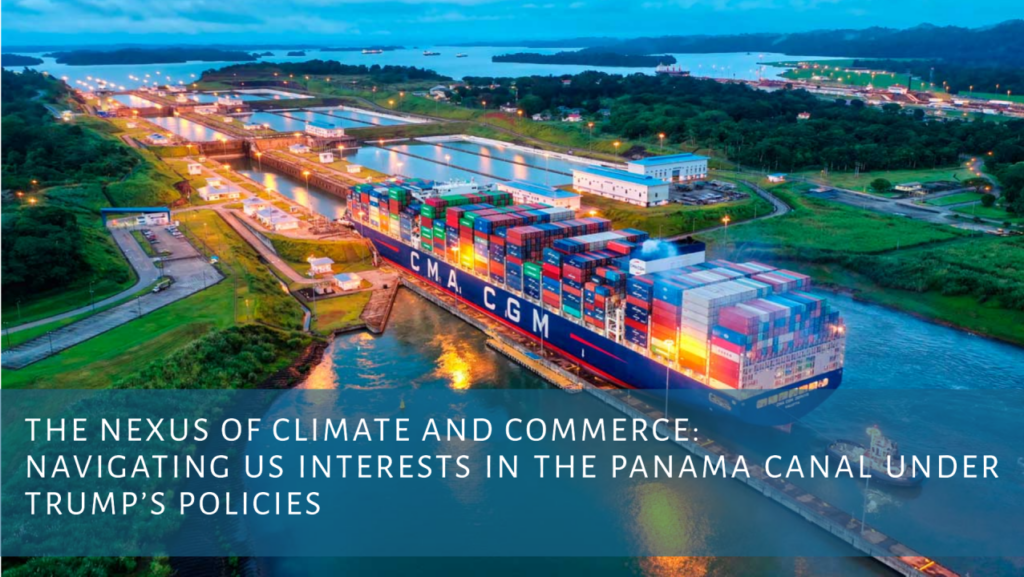
    The choice of Panama for the US Secretary of State, Marco Rubio’s first overseas trip reflects the growing geopolitical and economic stakes linked to the Panama Canal. The canal faces challenges from climate-induced water shortages and China’s growing regional influence. Severe drought, worsened by El Nino, has forced transit restrictions, disrupting supply chains and raising costs. Chinese investments in Panama’s ports fuel US strategic concerns.  President Trump’s withdrawal from the Paris Agreement, the suspension of US foreign aid, and calls to reassert US ownership of the canal, introduce new uncertainties. The Rubio visit signals that the US still recognises the canal’s importance. Although climate-related economic investments are not currently on President Trump’s agenda, they have the potential to help the US maintain influence over its critical trade routes, support Panama’s development without increasing Chinese dependency, and secure its strategic regional interests, all while staying true to “America First” priorities.

    THE STRUGGLING PANAMA CANAL: WATER CRISIS AND GLOBAL TRADE IMPLICATIONS

    The Panama Canal, responsible for about 5% of global trade, currently faces dangerously low water levels due to insufficient rainfall and the influence of El Nino. The canal is dependent on freshwater from Lake Gatun, and the ongoing drought has prompted the Panama Canal Authority (PCA) to impose water-saving measures, including reducing the number of ships passing through each day and restricting cargo weight. These restrictions create significant challenges for US LNG and grain exports as well as other industries dependent on the canal, leading to higher costs, supply chain disruptions and potential impacts on the competitiveness of US exports in global markets

    This situation highlights a critical vulnerability for global trade, especially for the US, which relies on the canal for 40% of its East-West coast of the Americas container traffic. Shipping companies have reported disruptions, with delayed shipments affecting everything from food to textiles. These disruptions further underscore how water scarcity at the Panama Canal could escalate trade costs and cause more severe delays as cargo is rerouted through alternative, longer routes.

    While the US exit from the Paris Agreement will upend international climate goals, the effects of the US exit on the Panama Canal will be more indirect at best.

    A more immediate issue is the suspension of US foreign aid in recent weeks, which has historically supported programs critical for Panama’s environmental management. These funds have been used to maintain the Chagres River Basin, which provides 45% of the water necessary for Panama Canal operations. The potential loss of these funds could directly exacerbate the water shortage and undermine efforts to preserve the water sources vital for both the canal and Panama’s urban water supply. This situation puts pressure on US strategic interests in Panama, particularly in maintaining unimpeded access to the Panama Canal, a crucial conduit for US maritime trade.

    GEOPOLITICAL AND ECONOMIC CONCERNS: CHINA’S ROLE AND US INTERESTS

    Beyond the environmental concerns, the geopolitical consequences of climate change at the Panama Canal should not be ignored. China’s growing economic footprint in Latin America, particularly in Panama, with investments in port operations near the canal, raises alarms in Washington about the long-term implications of China gaining control over vital infrastructure.

    Yet, while China’s economic interests and influence in Panama are expanding, the assumption that China controls the canal itself is an oversimplification. The canal is operated by the Panama Canal Authority (PCA), a government agency, and China’s investments are in port operations not the canal locks or its operations. Furthermore, Panama is a sovereign nation with significant economic and political leverage due to its control over a vital global trade route. This leverage allows Panama to negotiate favourable terms for canal transit fees, attract investment from both the US and China, and maintain its neutrality in the US-China rivalry. However, this leverage is not absolute. Both the US and China hold significant economic and political influence, and Panama must carefully navigate its relationship with both powers to maximise its own interests.

    Rather than focusing exclusively on China’s potential dominance, the US should recognise that Panama’s growing ties with China are part of a broader trend of Latin American countries diversifying their international relationships. The US should also consider its own diplomatic and economic engagement in the region, building alliances that are not solely focused on competition with China but rather on mutual development, including sustainable infrastructure projects to combat the effects of climate change.

    THE PANAMA CANAL AUTHORITY’S (PCA) RESPONSE: SUSTAINABILITY MEASURES AND LONG-TERM PLANNING

    The PCA has been proactive in addressing the current water crisis by implementing various sustainability initiatives. For instance, the Authority has invested in more water-efficient locks and developed methods to reuse water in the canal’s lock chambers, saving millions of gallons daily. Additionally, the Authority is considering a major project to build reservoirs by damming the nearby Indio River to supplement the canal’s water supply.

    While these efforts are commendable, it’s important to critically assess the feasibility and long-term impact of these measures. The PCA plans to allocate USD 2 billion towards the implementation of a more robust water management system in addition to an ambitious USD 8.5 billion investment plan, and it’s reasonable to expect that the entire process, from planning to full operationalisation, could take a decade or more. In the meantime, the canal will continue to face seasonal droughts, with the risk of further trade disruptions and economic losses. Moreover, while desalination could help address some of the water shortages, it is an energy-intensive process, which could add new challenges in terms of both costs and environmental impact.

    These sustainability efforts highlight the need for collaborative global solutions to ensure the canal’s viability. The US could play a key role by providing technical expertise, financial support, or other forms of facilitation to Panama in addressing these challenges.

    RETHINKING CLIMATE POLICY AND US INTERESTS IN THE PANAMA CANAL

    The US withdrawal from the Paris Agreement limits its role in some international climate forums but still allows room for effective bilateral cooperation with Panama. The US can establish agreements focused on sharing expertise in climate-resilient technologies, implementing renewable energy and water conservation projects, and offering technical assistance to Panamanian institutions. The US private sector can invest in sustainable technologies like renewable energy and water treatment, partnering with Panama on innovative climate solutions. Additionally, US states, cities, and NGOs can advance grassroots climate cooperation, exchanging knowledge and developing localised solutions.

    This approach aligns with President Trump’s “America First” policy by prioritising US economic and security interests. Climate resilience projects in Panama protect vital trade routes like the Panama Canal, crucial for US commerce. US companies benefit from investing in renewable energy and infrastructure, creating economic growth and innovation. Engaging with Panama on shared interests strengthens American interests in economic stability, security, and regional influence while staying true to the “America First” agenda.
  • GREEN HYDROGEN: THE PROMISE IS REAL. SO ARE THE CHALLENGES

    The green hydrogen industry, once buoyed by early optimism, is now facing significant challenges. Many projects in Europe and the US have either stalled or been delayed. In the US, regulatory uncertainty and in Europe, bureaucratic hurdles and insufficient funding are slowing progress. Earlier this year, the European Court of Auditors highlighted that the EU’s hydrogen goals face feasibility challenges. A McKinsey report states that 18% of North American and 5% of European clean hydrogen projects planned for 2030 have reached a final investment decision (Hydrogen Council).

    While progress in the US and EU is measured, emerging markets like Saudi Arabia, Morocco, and Chile are rapidly advancing their green hydrogen ambitions, leveraging abundant renewable resources and supportive policies. Yet, to sustain this momentum, these regions must overcome critical barriers, most notably water scarcity and material constraint – factors that will ultimately shape the viability of green hydrogen globally. Overcoming these challenges will require innovation in water efficiency, alternative materials, and recycling. Though progress is promising, these constraints remain central to the industry’s ability to scale effectively.

    A PARCHED PATH: WATER AND ENVIRONMENTAL HURDLES

    The production of green hydrogen through electrolysis is water intensive. The production through electrolysis proportionally requires about 9-14 litres of water per kilogram of hydrogen, with additional water for purification and cooling, bringing total consumption to 20-30 litres per kilogram, depending on electrolyser efficiency, water quality, and cooling systems.  This reliance on water exacerbates existing pressures in water-stressed regions. A growing global concern. For example, Saudi Arabia, home to the NEOM Green Hydrogen Project, despite its abundant renewable energy, faces severe water scarcity. Green hydrogen production, requiring significant water for electrolysis, poses a challenge in this “hyper-arid” environment (The Forum ERF).

    In Saudi Arabia, the NEOM project seeks to tackle the challenge of securing sufficient fresh water by relying heavily on desalination, an energy-intensive process requiring 4 to 5 kWh per cubic meter of water (UNEP). While renewable energy sources are used to power some desalination, the energy demand remains high, and the associated costs could undermine the economic feasibility of green hydrogen production in such a water-scarce region. In some markets, this could also divert renewable energy from the grid, limiting availability for other sectors.

    Additionally, the disposal of brine, a byproduct of desalination, presents environmental risks, particularly in marine ecosystems (UNEP). In Oman, for instance, desalination plants are facing challenges related to the high salinity of brine discharge, which negatively impacts coastal ecosystems (IEA).

    Morocco and Chile are also emerging as global hubs for green hydrogen production and face significant challenges due to water scarcity. Both countries are leveraging their abundant solar and wind resources, making them ideal for electrolysis-based hydrogen production, but their water resources are constrained. In Morocco, agriculture accounts for 88% of total water use (The World Bank), while in Chile, the Atacama Desert is among the driest regions on Earth, competing for water between mining, agriculture, and industrial use (IWA).

    Nevertheless, international partnerships, pilot projects, and growing market demand are accelerating the development of green hydrogen ecosystems in both countries. Morocco’s Green Hydrogen Strategy aims to produce 4 million tonnes of green hydrogen per year by 2030 (netzerocircleorg), while Chile is positioning itself as a key player in global hydrogen exports, with several high-profile projects in the pipeline (gh2org). Yet, both countries will need substantial investment in infrastructure, including water-efficient technologies and low-energy desalination methods, to ensure that green hydrogen production remains both sustainable and economically viable.

    To mitigate these challenges, green hydrogen projects need to focus on efficient water use and adopt innovative solutions like closed-loop water systems, which recycle water used in electrolysis, minimising overall consumption (Xylem). Furthermore, the development of low-energy desalination technologies, such as reverse osmosis and electrodialysis, can help reduce both the energy consumption and cost of desalination, making it a more viable option (Veolia). New desalination techniques could reduce energy costs by up to 30% compared to traditional methods (IEA-OES).

    While these solutions offer potential, the competition for water in already-stressed regions cannot be overlooked. To ensure sustainability, hydrogen production must be planned strategically, prioritising regions where water use can be balanced with local needs, especially in areas already facing severe water scarcity.

    As green hydrogen scales up, these projects should be designed to minimise strain on limited water resources and ensure access to water for essential uses, including agriculture and drinking water.

    A PRECIOUS STRAIN: MATERIAL DEPENDENCE AND COSTS

    The green hydrogen industry also faces challenges from its reliance on scarce and costly materials like iridium and platinum, essential for electrolyser production. Iridium, with a global output of just 8–9 metric tons annually, is a by-product of nickel and copper mining (Enapter) and one of the most expensive elements, with prices driven by demand from electronics, aerospace, and automotive sectors (SFA Oxford). Platinum, though more abundant, has seen prices rise over 400% in recent years due to high demand from industries like automotive (catalytic converters), jewellery, and industrial applications (Platinum Investment).

    As the green hydrogen sector grows, reliance on rare metals for proton exchange membrane (PEM) electrolysis could become a bottleneck. PEM electrolysers require 300 to 400 kg of iridium per gigawatt (GW) of production capacity (Heraeus). With global PEM electrolyser capacity potentially reaching 30 GW, iridium supply is already stretched, and current production rates do not meet the forecasted demand. IRENA projects 5,700 GW of electrolyser capacity by 2050. As of 2023, global capacity was 1.4 GW, expected to reach 5 GW by 2024.

    To address supply constraints, researchers are exploring alternatives to iridium and platinum, such as non-precious metal catalysts (NPMCs) and metal-organic frameworks (MOFs), to reduce material dependence and costs in hydrogen production (MDPI). Recycling could also alleviate pressure on the iridium supply, but extracting iridium from electrolyser components presents technical challenges. Efficient recovery requires advanced technologies, and cost-effectiveness must be assessed against savings from reduced reliance on primary iridium. Supportive regulations are also necessary to incentivise recycling and ensure environmental sustainability (Johnson Mathey).

    Alkaline electrolysers use nickel, relative to iridium, as a more cost-effective option for large-scale hydrogen production. While widely used for this purpose, they are increasingly being outpaced by PEM electrolysers, which are better suited for smaller-scale, modular applications. As demand for green hydrogen increases, PEM technology is preferred for fuel cell vehicles and industrial processes. Both alkaline and PEM electrolysers offer unique benefits and drawbacks, with the best choice depending on specific use cases and operational needs (Idetechex).

    Reducing material dependence and managing supply chain complexities are key to scaling green hydrogen production. Strategic investments in alternative materials, advanced recycling, and diversified electrolyser designs are crucial to addressing resource bottlenecks limiting growth.

    ON BALANCE

    Water scarcity and material demand are real challenges for green hydrogen but not insurmountable. With enough time and investment, solutions such as improved water management, recycling, and alternative materials can address these issues.

    However, the greatest barrier is not the challenges themselves, but the time and financial resources required to overcome them. As green hydrogen aims to integrate with established clean technologies like wind, solar, and battery storage, its ability to compete will be shaped by the availability of these critical resources.

    Image credit: Linkedin image generator